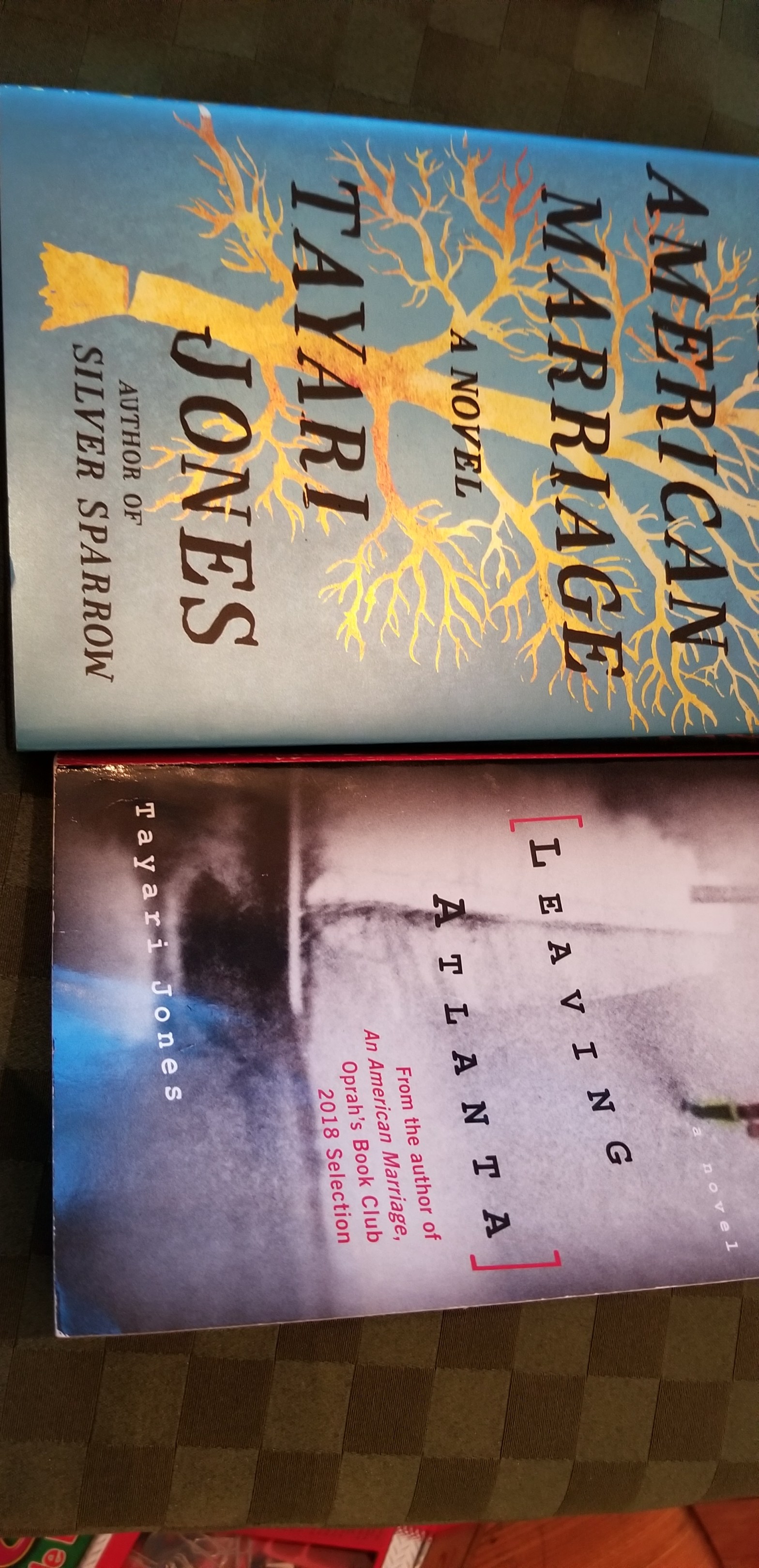
Tayari Jones is back in her hometown Atlanta, teaching Creative Writing at Emory after being in New York for a decade. She is also a professor-at-large for Cornell. We have three of her four books in our house, and my partner, Julie, handed me Leaving Atlanta which is a novel set in Southwest Atlanta from 1979-1981 when the Atlanta Child Murders were taking place. I hadn’t really heard about the 29+ African American children that were murdered, but Julie says she remembers it from back then and how it was all over the news even in St. Louis. I put the book back on the shelf. I mentioned that I’m kind of a wimp about content so I picked up her newest novel, An American Marriage that was written in 2018, thinking it might be easier.
It is a novel about what happens in the relationship between a married couple and in the community when the husband is wrongly incarcerated. I guess it says something that I thought mass incarceration would be easier to think about than mass murder which is wrong.
It is very readable. The pages turn (and I also mentioned that pages often don’t turn easily for me) but when I was about half way through it, I stood in our cluttered kitchen and said to Julie, “There’s something I just can’t quite latch onto.”
and she said, “Maybe it’s because of whiteness.”
My partner is a professor of Women’s, Gender and Sexuality studies so she knows stuff about structural oppression. When she says that to me I know she means it as a cultural not seeing that I am not even aware of. I can’t figure out immediately how whiteness may be impeding my ability to connect to this novel, but I say, “huh” because that is always a possibility and go back to the living room to keep reading.
I finished the book and felt more connected to the characters in the second half than the first, but there was still something I couldn’t quite put my finger on. There are three first person narrators: Roy (the husband), Celestial (the wife) and Andre(her best friend). I feel like Celestial is not quite there. She’s floating on the periphery of the book, and I can’t really get to know her even though I want to. I don’t feel like I have enough to say in a book review so I suck up my content wimpiness and read Leaving Atlanta.
This book also has three narrators although the perspective is limited third person rather than first, and they are all extremely likeable, personable children. They and their families and communities are suffering from the terror of children disappearing. When it starts, Tasha’s mom doesn’t want to talk about it, and Tasha’s dad corrects her and my content wimpiness by saying, “How can I say that I can’t stand to talk about it? And how can you say you can’t stand to hear it when other people are living it?”(79) Words to live by.
In the middle of reading Leaving Atlanta, I read an interview with Tayari Jones in the Paris Review about An American Marriage and the question of whiteness impeding me becomes clear.
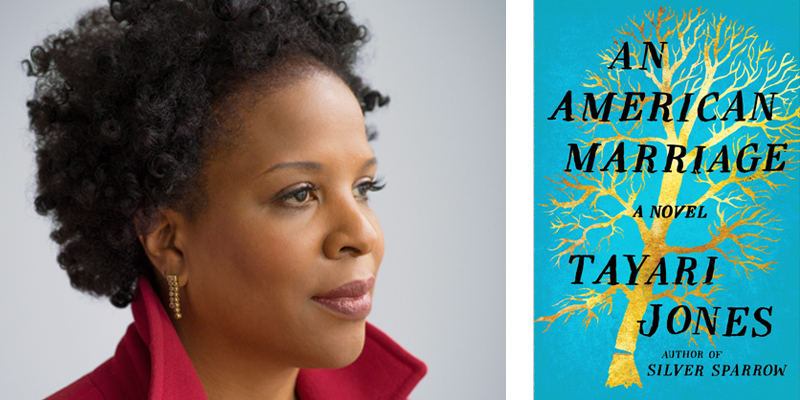
Jones talks about when she was writing An American Marriage her readers gave her a hard time about Celestial. They felt like the choices Celestial made were wrong or disappointing because she didn’t fight for her man enough although that wasn’t the story Jones was trying to tell so she grounded the novel more in Roy’s perspective. She says, “She is made responsible for Roy’s happiness or unhappiness. In this book, I feel almost like she receives more blame than the prison system.”
and the perspective of whiteness became clear. I want Celestial to just say, “Here I am. This is me. I am bold. I am free. I choose my own path.” and of course she can’t because she and everyone else in her family are just as imprisoned by the horrors of mass incarceration as their loved ones in prison.
Celestial and her family can never really know what life is like for Roy inside prison, and Roy can never really understand what their lives are like tied to him but on the outside so they are forever connected but can never really know each other, never be together, but also never really separate and break free and in this way, the entire community is held down by their throats unendingly.
So I get it. Jones has done an incredible job through fiction of showing the intimate wounding of mass incarceration in one way through a main character who is never quite there because the world will not allow her to be.
It seems like too much to try to talk about Leaving Atlanta (Jones’ first novel written 16 years before An American Marriage) now but this book also upends expectations. It doesn’t teach you about loss through graphic depiction, a ziplock bag with something unspeakable under the leaves. It teaches through having you love children as children…in some ways they are things Celestial can’t be….so very much themselves and showing up all the way in all their childhood voice, sass, sarcasm, hope and pain, and then affords you the opportunity to experience all that life there one second and not the next.
I was sitting under our tree finishing Leaving Atlanta yesterday when our neighbor came to the other side of the fence and mentioned that she had just finished a walk for Ahmaud Arbery.
I didn’t even know it was happening. I thanked her for doing it, and made a pledge to myself that will need to be renewed daily. To live a little less my fantasy of individual freedom and promise a little more to be responsive to what people are actually living through.
 Inspiration and Information for Immigrant Advocacy