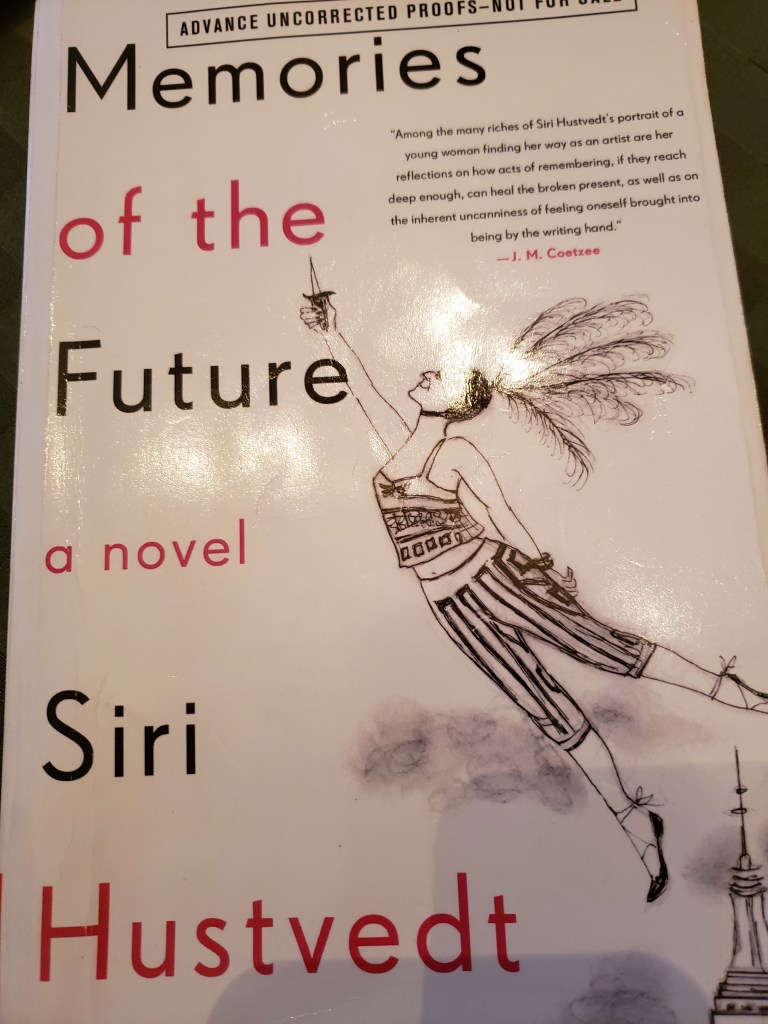
Have you ever hiked to the bottom of the Grand Canyon? I did it twenty-one years ago, and it is one of the most amazing things I have ever done.

The canyon is like this living creature that is completely different on each level that you hike. At the top it looks like this, but then go a little further down and it looks like this.
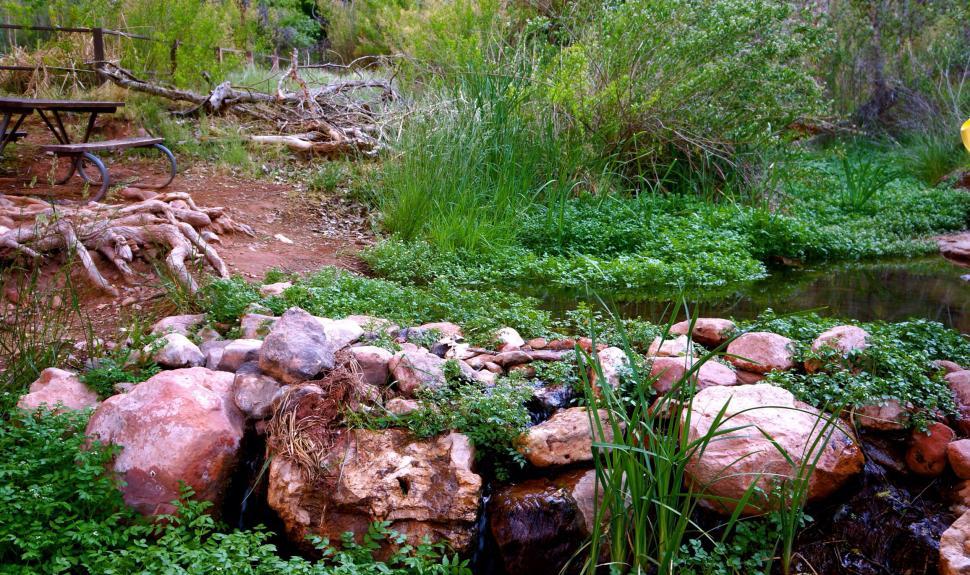
That’s what Memories of the Future by Siri Hustvedt is like. It’s a wild thing with a life of its own that is ever changing, but then also fixed and observable because it is a book. It is a book that I will need to read more than once (something I very rarely do) because there are things that I caught late, and I want to go back and reread it from the beginning with that knowledge in my head. My friend who knows more about literature than I do picked it up and read the description and said, “You’re reading a memoir,” and I said, “No. It’s a novel.” We were both right. Neither of us was right. It’s funny how many books I have reviewed that have this relationship to fiction/memoir: both, neither. I just read in a NY Times book review that there is a new term that is au courant “autofiction”. Sweet. I feel so literate and hip, and you can too.
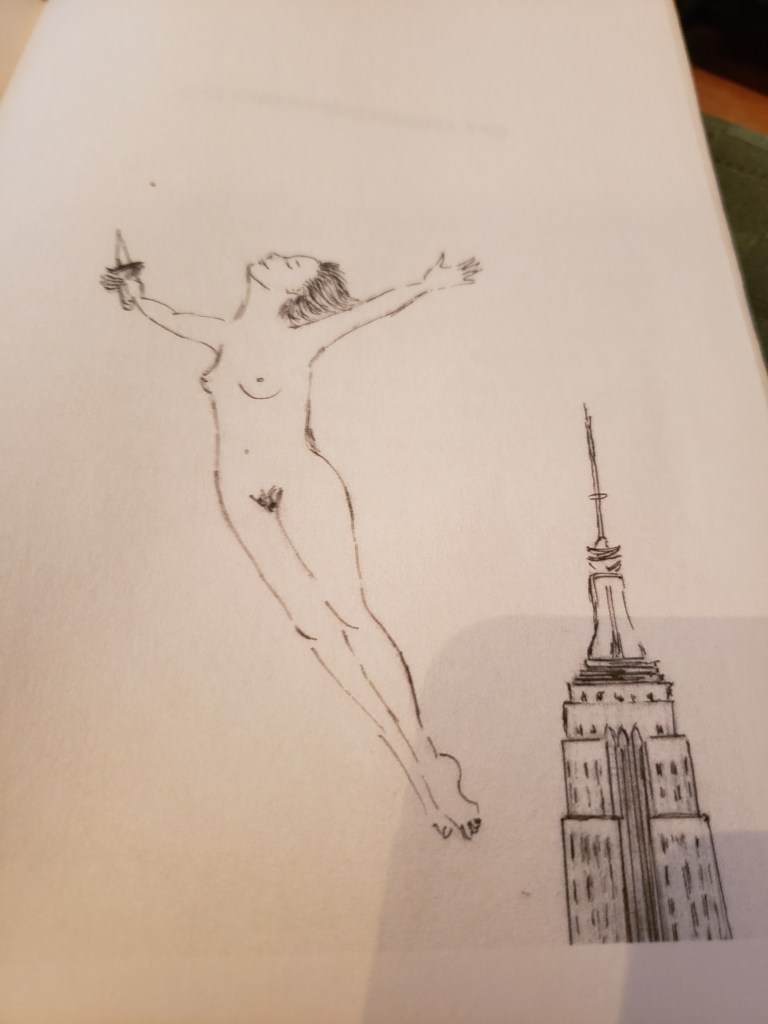
Hustvedt refers to this book as “A portrait of an artist as a young woman”. I love that. I always loved James Joyce’s title, “A Portrait of the Artist as a Young Man”, and we had a copy of it in our house when I was at upper crusty, private high school, but I never read it because I thought I was too stupid to understand it. That didn’t happen to Siri although she deeply understands the sexist world of academia that made me feel that way. She read every book in every field and blasted through it, grabbing on to the language and the concepts like a vise. Her Math and Science scores had to be a lot higher than mine and you will see how beautiful she is in a second, but none of that spared her from being subjugated to the never being allowed in, the being allowed a seat at the very corner of the table in order to be looked at but don’t say too much too loudly world of male dominated academia. Not that’s it just academia mind you that does that. It’s most places, and it’s subtle and so deeply ingrained that we hardly notice it. What I love about this book is that she fights back with a dagger in her mouth (metaphorically) and a dagger in her hand (literally in one section). She fights back in her writing, in her thinking, in her imagination, in the women she connects with although every bit of it is riddled with the deep fear that she isn’t fighting hard enough or that it won’t do any good. Everyone who experiences oppression and fights against it has that, I think.
I had never heard of Siri Hustvedt before I picked this book up in a remote wooded free library. She was born in Minnesota, and this becomes the nickname her friends in New York City where she was a Phd student in English at Columbia give her, “Minnesota”. Her mother was Norwegian, and her father was an American who was a chair of Norwegian Studies.
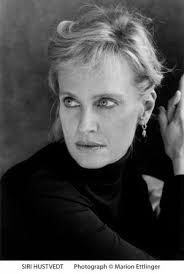
This image of Siri Hustvedt is not the right one to choose probably because in Memories of the Future published in 2017, she is 62 years old reflecting back on her first year in New York in 1978 when she was 21 years old. This picture looks to me to be somewhere between those two ages, but it shows in my mind her urban dazzling beauty and her unrelenting will which are qualities which are very pivotal to her autofiction. (Look, I used it in a sentence!) She finds a Mead notebook that she had kept her journal in when she was younger and she decides to explore the person she was then and now. (The exact same thing that happens to Barbara Ehrenreich in my review If you Catch a Sasquatch, Let her Go!)
She lives in a tiny, dilapidated apartment next to a woman named Lucy who calls out in the night with odd and terrifying phrases like “Amsah, amsah, I’m sad, I’m sad, I’m sad, I’m sad.” and speaks in a rambling non linear way that is scary and fascinating. In a short time, it appears that Lucy is telling the story of a terrible thing that has happened to her, but in a disjointed, non chronological way, and SH (Hustvedt’s younger self who is working on a Sherlock Holmesian type mystery novel) takes to listening through the wall with her father’s old stethoscope to try to put together the pieces of the mystery.
This book is the first book I have read in a very long time that I had to read with a pencil because there were so many phrases I wanted to underline, especially in the beginning. Here are a few: “those authors who claim perfect recall of their hash browns decades later are not to be trusted.” (3) the phrase from someone else that often fills her head, “The irrationality of a thing is no argument against its existence, rather a condition of it.” (8) “Despite my ripening sense of irony, on the subject of dead mothers I remained sincere.” (18) “Sexual fantasy is a machine, not an organism.” (21) (This last one could be a whole series of inquiries and should be, but…another time.)
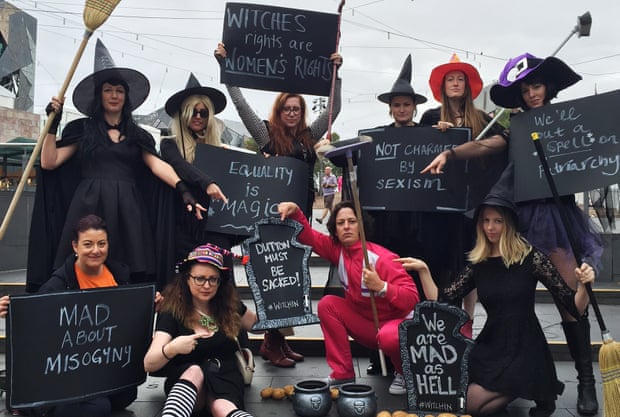
It’s true that there are moments in the book that wander and I’m not totally sure where we are, but I’m ok with that. I feel a deep companionship with Hustvedt and maybe a little bit of a straight girl crush. (ie: she is a straight girl (mostly) and I have that enamored quality of I like her in the way that I want to be like her…I feel that way about Jane Fonda too.) and I think we come from the same feminist ooze, have crawled onto the shore of existence fighting with fists of literature that don’t belong to us but are the only weapons we have and long for a witchcraft that serves others and for whatever reason doesn’t fit us. I don’t want to give too much away here, but the following personal narrative shows that Hustvedt and I are made from the same ilk, and you will just have to read all the way through Memories of the Future to figure out why. (I hope this story doesn’t plot spoil anything for you.)
I don’t know why I was home in the middle of the day, lying on the couch in my ugly yellow Family Dollar pajamas that were too comfortable to throw in the trash, but I was. There was a loud knock on the door, and I peered out the window to see who it was. A woman with waist long blonde (I mean tow headed blonde!) hair dressed all in black leather was standing on the front porch. My partner and I were working on adoption and after 16 months things were starting to feel desperate. People were giving us things like fertility amulets and magical wishing beads to be burned, and as I was sitting on the floor of our bathroom in the dark the night before with a fertility amulet between my legs with the smell of wishing beads burning in my nose, I thought to myself, “I wonder why I never got around to becoming a witch.” I wasn’t thinking about this as I got off the couch in my ugly pajamas to answer the door, but you need to know it in order to be as surprised as I was when I opened the door and there stood a friend of mine from Psychology graduate school and she said, “I have just finished my final breath work class for my Shamanic Priestess certification, and I was wondering if you were interested in becoming a witch.” The thing that Hustvedt and I have in common is the fact that in spite of our loathing of the patriarchy, we both just kind of don’t feel it and say, “Uh…no thanks,” and perhaps neither of us understands why. My friend was unfazed and said, “Ok, well, I’m also selling Harley Davidsons,” and points to the cherry red one parked in front of my house. “You wanna go for a ride?” This I say yes to and quickly change out of my ugly pajamas and don the Mulholland helmet she offers me. We all have to choose our own magics. (the ferility amulet wishing beads worked by the way. A few months later our dreams came true.)
Hustvedt includes some drawings that were in her journals from 1978 and the following picture is from the last page of her book. I could have skipped all these words and just posted a picture, and you would have gotten a very deep idea of the book anyway.
Bonus Biographical Info:
I google stalked a little more and Hustvedt is married to Paul Auster, a post modern novelist who has also published poetry, screen plays and essays. They have a daughter Sophie Auster who is a singer and her song Mexico is featured in John Turturro’s 2019 film, ‘The Jesus Rolls,’ a spinoff of ‘The Big Lebowski, but I like the video for her song ‘If I Could” better. Check it out.
Hustvedt has managed to write 12 books, have a successful marriage with another author and make this human being who seems happy and has a cool avant garde career. Dude. Feminism works.
 Inspiration and Information for Immigrant Advocacy